
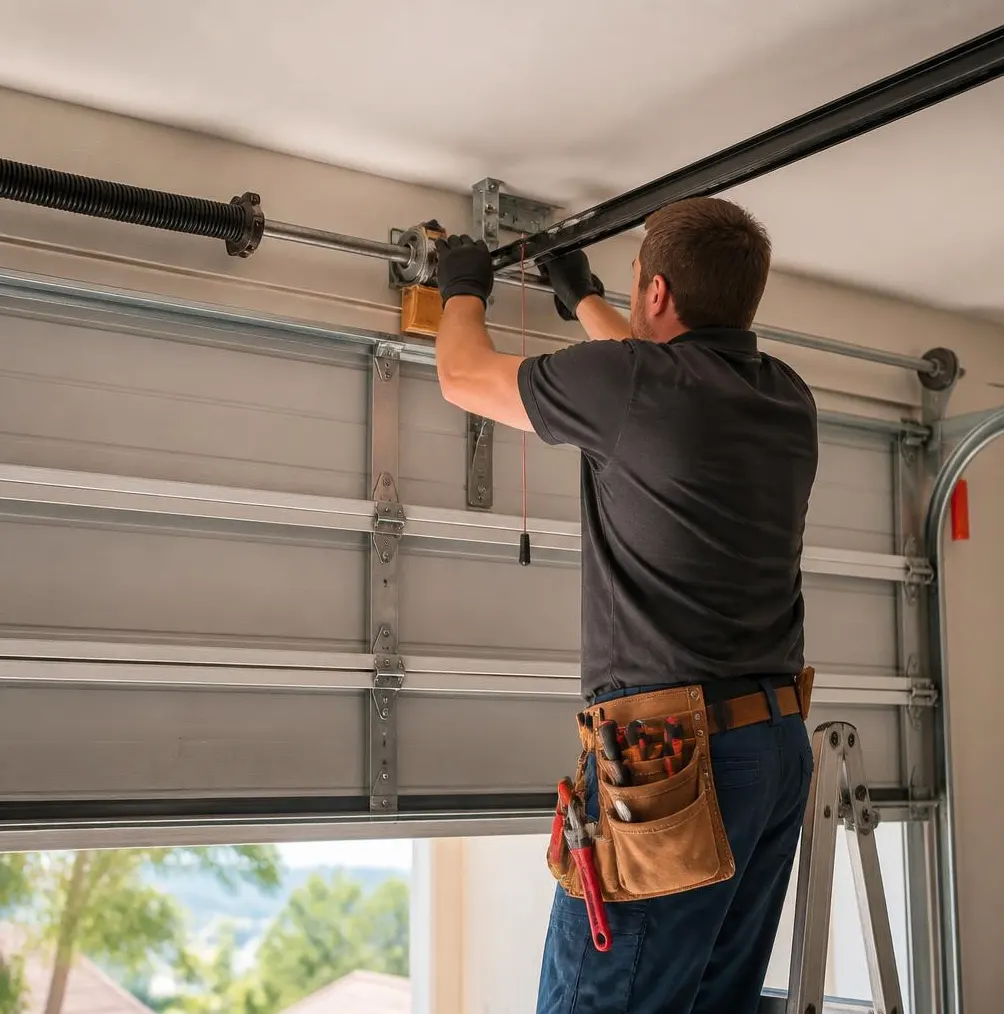
The Argument You're Having Right Now
One of you is convinced the heating bill went up because of something else entirely — the thermostat, the furnace, the weather. The other is pointing at the garage door. Here's the mistake the first person makes, and it's an easy one: the door looks closed. It goes down every night, it touches the floor, so logically it should be sealed, right?
Closed and sealed are not the same thing. A garage door can be fully down and still move air like a loose window. That's the part that's hard to see from inside the house, which is exactly why this argument keeps happening.
Why a Closed Door Still Lets Air Through
A garage door seals in four places: the bottom (the rubber astragal), the two sides, and the top. Any one of those can fail without the door looking broken at all. Common culprits:
- Bottom seal that's cracked, flattened, or pulled away from the track — very common after a few winters of freeze-thaw cycling
- Side and top weatherstripping that's brittle, torn, or missing in sections, especially on older doors that came with the house
- Warped or dented panels, often from a car bumper tap or just age, that no longer sit flush against the frame
- Gaps around the garage's man door (the side door into the yard), which people forget is also part of the garage's envelope
- Uninsulated door panels — a lot of original doors in this area are a single layer of steel or wood with no foam core at all
Any one of these lets outside air mix with the air in the garage. If that garage shares a wall with the living space — which almost all attached garages do — that temperature swing doesn't stay contained. It pulls heat (or in summer, cooled air) right through the shared wall and the door connecting the garage to the house.
Why This Matters More With an Attached Garage
In a detached garage, a drafty door just means a cold garage. In an attached garage, it means your furnace and AC are fighting a room that's basically outdoor temperature half the year. A few things make this worse in this part of New Jersey specifically:
- Older housing stock often has the original garage door still installed, with weatherstripping that's decades past useful life
- Salt and road grime from winter driving collect on the bottom seal and accelerate cracking
- Repeated freeze-thaw cycles through a typical winter make rubber seals stiffen, shrink, and pull away from the track
- Nor'easters drive wind and moisture sideways into side and top gaps that would never leak in calm weather
- If any HVAC ductwork or a water heater runs through the garage, that equipment is sitting in a space that's essentially semi-outdoors
What This Actually Costs You
Nobody can quote an exact number without seeing the house, but the pattern is predictable: the furnace or AC runs longer and more often than it should, because the thermostat is reacting to heat loss through a wall it assumes is interior. Homeowners typically notice it as a furnace that seems to run constantly in January, a cold floor in the room next to the garage, or an upstairs bedroom above the garage that's always a few degrees off from the rest of the house. None of that shows up as one dramatic bill spike — it shows up as a bill that's quietly higher all season.
What Actually Fixes It (In Order of Value)
- Replace the bottom seal first. It's the cheapest fix and usually the biggest single leak source, especially if it's visibly flattened or cracked.
- Replace side and top weatherstripping if it's brittle or has gaps you can see daylight through.
- Check the door's alignment and balance. A door that's slightly out of track or has a weak spring won't seat evenly against the weatherstripping even if the seals themselves are fine.
- Add a threshold seal on the garage floor if the existing bottom seal still doesn't close the gap on an uneven slab — common in older driveways that have settled.
- Consider an insulated door or retrofit insulation kit if the current door is a single layer of steel. This is the bigger investment but the one that actually changes the garage's baseline temperature, not just the draft at the edges.
The trade-off is honest: seals and weatherstripping are quick, inexpensive, and fix most of the draft problem. A new insulated door is a bigger project that pays off more over time, especially in a garage with ductwork or a lot of shared wall with living space.
When to Call Lawnside Garage Door
If the door looks fine from the driveway but the garage still feels like the outdoors, it's worth having it looked at before winter sets in rather than after a seal fails in a cold snap. We handle garage door maintenance visits that check seals, balance, and track alignment, and we do straightforward garage door repair for cracked bottom seals, torn weatherstripping, or panels that no longer sit flush. If the door itself is old enough that sealing it properly isn't realistic anymore, we'll tell you that honestly rather than patching something that needs replacing.
If you're in Lawnside, Haddonfield, Haddon Heights, Barrington, Magnolia, Somerdale, Stratford, or Cherry Hill and your garage door has been part of the heating-bill argument at your house, give Lawnside Garage Door a call. We'll find out which side of the argument is right.